







- Where
- Assisi, Umbria and Marche
- Directions
- Directions
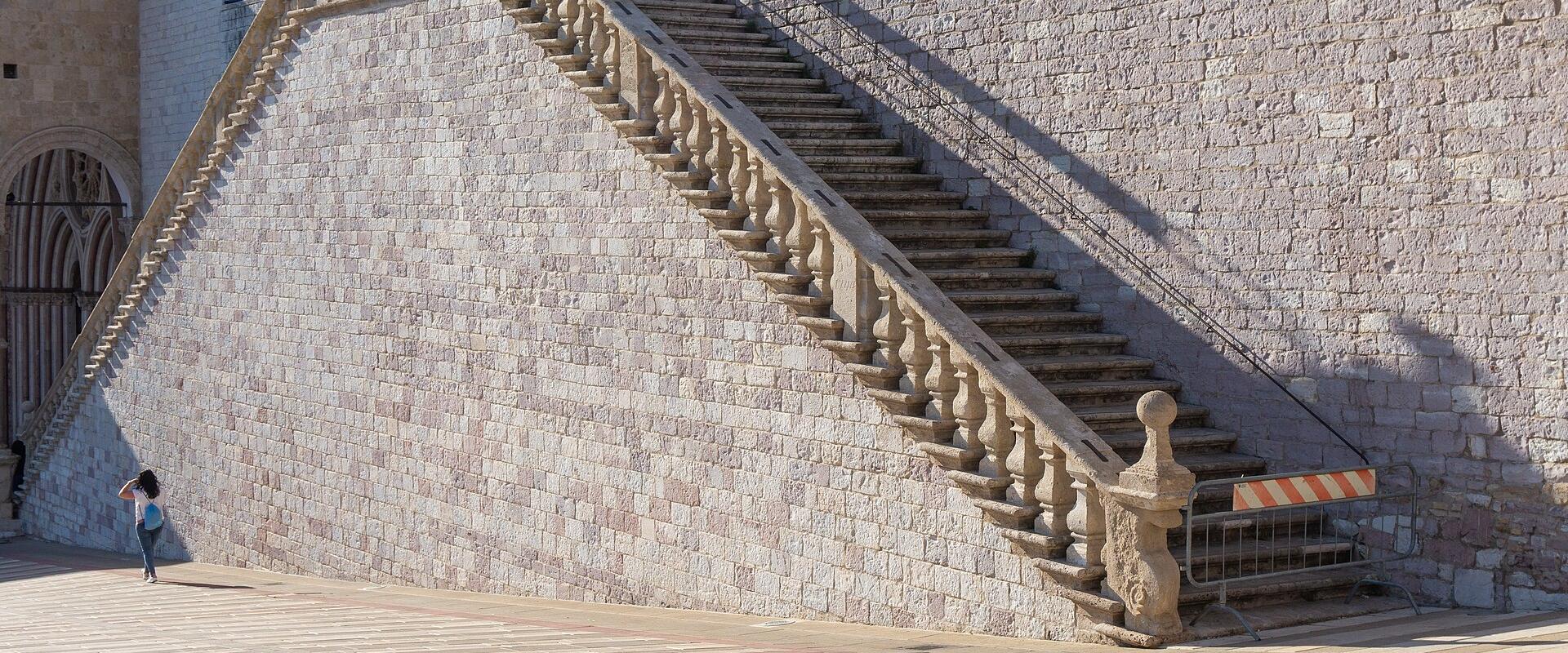
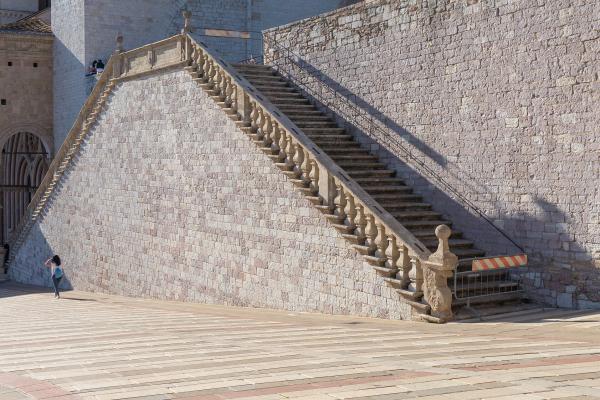
The Basilica of Saint Francis of Assisi is the great pilgrimage church of the Franciscan order and the most visited site in Assisi. It rises on the western edge of the old town, on a spur known as the Colle del Paradiso, with a long stone arcade that makes it visible across the Umbrian plain. Saint Francis died in 1226 and was canonised two years later; the foundation stone was laid in 1228, and the church was built quickly to receive his body. It forms part of the UNESCO World Heritage Site covering Assisi and the Franciscan sites.
The basilica is actually two churches stacked on top of each other, together with a crypt. The Lower Basilica, low-vaulted and dim, was built first and holds the tomb of Saint Francis in the crypt beneath the altar, where visitors can pass in silence. The Upper Basilica, finished in the mid-13th century, is tall, bright and Italian Gothic in style, one of the earliest in Italy to draw on French models. The two levels differ in mood: the lower church feels like a sanctuary, the upper like a picture gallery.
The art is the main reason most people come. The upper church carries a cycle of 28 frescoes of the life of Saint Francis along the nave walls, traditionally attributed to Giotto, though scholars have long debated who painted which scenes. The most famous shows Francis preaching to the birds. Cimabue painted in the transepts and apse, and although his work has darkened with age, his monumental figures remain striking. In the lower church, Simone Martini decorated the chapel of Saint Martin, and Pietro Lorenzetti painted scenes from the Passion, with a lively sense of emotion and architecture.
The basilica was badly shaken by the earthquake of 1997, when part of the vault in the upper church collapsed. Fragments of frescoes were painstakingly recovered and reassembled, and the church reopened within a couple of years. Look at the vault of St Matthew, where the repair work is described in exhibits.
Plan for silence and modest dress, because this is an active place of worship with strict rules about covered shoulders and knees, quiet voices and no flash photography. The area around the basilica is largely pedestrian, and visitors usually arrive on foot from the lower or upper piazza; the town has train service to Assisi station in the valley with local buses up to the old town. Check local information for the latest opening times and visiting rules before going. Best for travellers interested in medieval art, pilgrimage and the spiritual legacy of Francis, and worth an early visit before the day-trip groups arrive. The Sacro Convento attached to the basilica still houses a community of friars.
Categories
More photos coming soon
Nearby Attractions
Other places to visit in Assisi
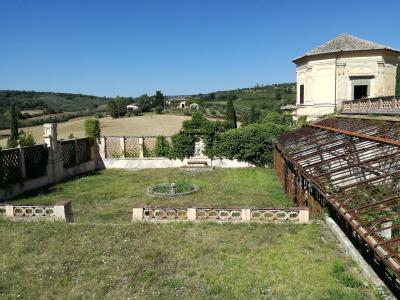
Giardino del Cardinale
13th-century garden with medieval frescoes
Botanical Gardens · Scenic Viewpoints
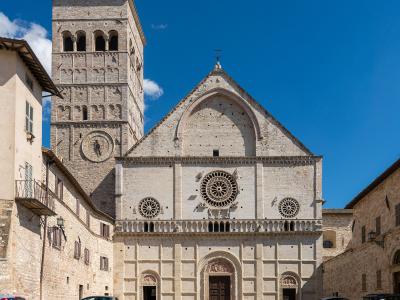
San Rufino Cathedral
13th-century Romanesque cathedral with St. Francis font
Architectural Monuments · Historic Churches
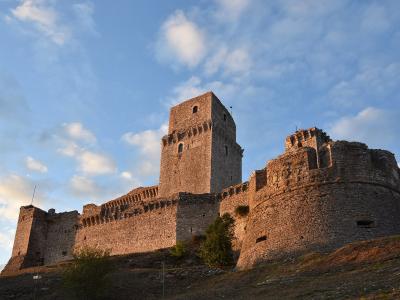
Rocca Maggiore
14th-century fortress with panoramic Umbrian views
Castles & Fortresses · Cultural Tours
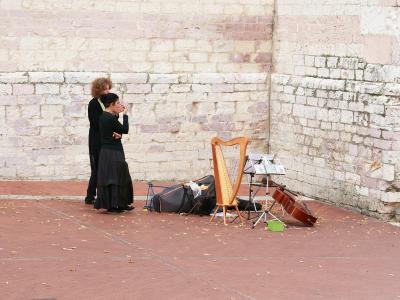
Assisi Jazz Festival
Jazz festival in UNESCO-listed Assisi
Museums & Culture
Questions people ask
Quick Facts
Best Time to Visit
Visit in April to June or September to October for mild weather and fewer crowds.