







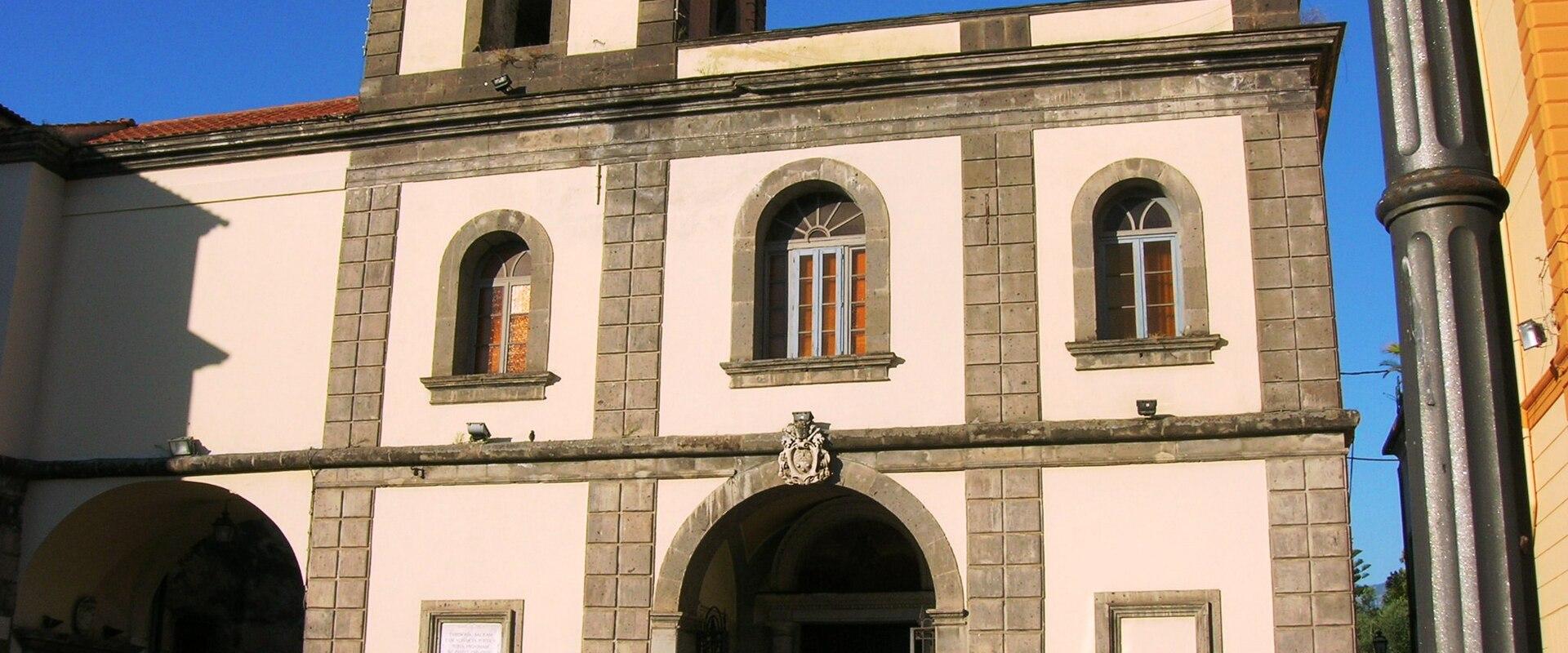
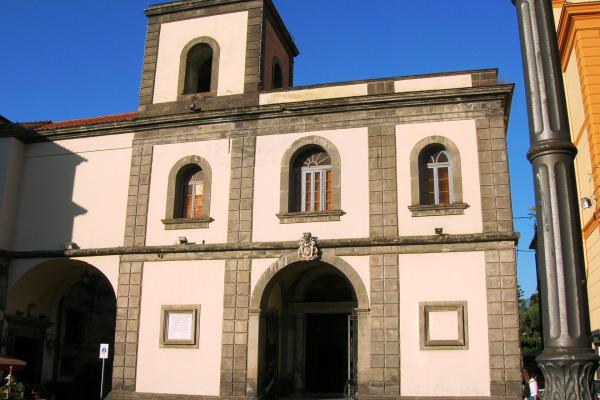
Basilica of Sant'Antonino
11th-century basilica of Sorrento's patron, with whale bones
- Where
- Sorrento, Campania and Amalfi Coast
- Directions
- Directions
The Basilica di Sant'Antonino stands on Piazza Sant'Antonino, a few steps from Piazza Tasso, and is dedicated to Sorrento's patron saint, Antoninus the Abbot, who died on 14 February 626. After the cathedral, it is the most important church in the town and the one most closely tied to local tradition.
The basilica was built in the eleventh century on the site of a ninth-century oratory over the saint's tomb, and part of the older chapel was absorbed into it. The spot lay just outside the town walls, where three of the main roads into Sorrento met. The builders reused marble and columns from pagan temples and Roman villas along the coast. In 1608 the church passed to the Theatine order, who remodelled it in the Baroque style of the Counter-Reformation. The facade and bell tower were rebuilt in 1668, and stucco and friezes were added in the eighteenth century. The building was repaired after the Irpinia earthquake of 1980 and restored again in 2010 and 2011.
The first thing most visitors notice is in the small portico at the entrance: an urn holding whale bones. They recall the best-known legend of the saint, who is said to have rescued a child swallowed by a whale, and they make the church a favourite with children. Inside, the church has a Latin-cross plan with three naves separated by six arches on granite columns, many of them taken from Roman buildings. The ceiling carries three canvases by Giovanni Battista Lama, dated 1734. A silver statue of the saint is signed by Scipio di Costantio and dated 2 February 1564; an earlier statue was reportedly melted down after the Turkish raid of June 1558.
Two marble staircases lead down to the crypt, the Succorpo, which holds the saint's remains and a silver lamp kept permanently lit. Its walls are lined with ex-voto paintings, many showing ships in storms, given by sailors who believed the saint had saved them, and the sacristy holds dozens more. An eighteenth-century Neapolitan nativity scene, stolen in 1983, was rebuilt with pieces donated by Sorrento families.
The basilica suits anyone interested in local devotion, maritime history and Baroque decoration. On 14 February the saint's silver statue is carried through the streets in procession, with lights and fireworks.
Categories
More photos coming soon
Nearby Attractions
Other places to visit in Sorrento

Bagni della Regina Giovanna
Natural sea pool beside a Roman villa ruin on Capo di Sorrento
Free Natural Wonders · Ancient Ruins
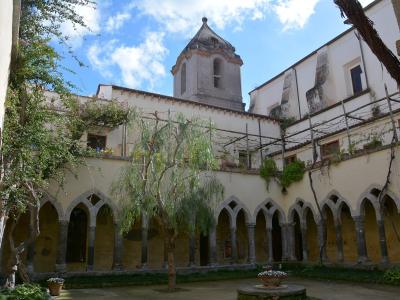
Cloister of San Francesco (Chiostro di San Francesco)
14th-century Franciscan cloister of interlaced tufa arches
Architectural Monuments · Historic Churches
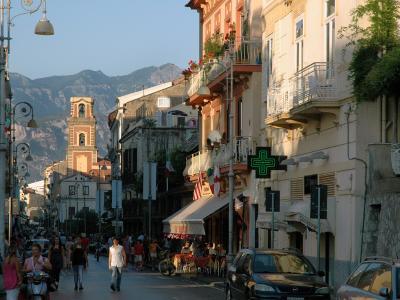
Corso Italia
Main street of Sorrento with shops and beach views
Free City Promenades · Historic Districts
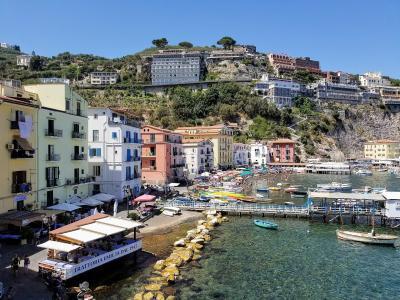
Marina Grande (Sorrento)
Sorrento's old fishing harbour, entered by a Greek-era gate
Fishing Villages · Harbor Views
Questions people ask
Quick Facts
Best Time to Visit
Visit between April and June or September and October for mild temperatures and fewer crowds.