







- Where
- Bari, Apulia
- Directions
- Directions
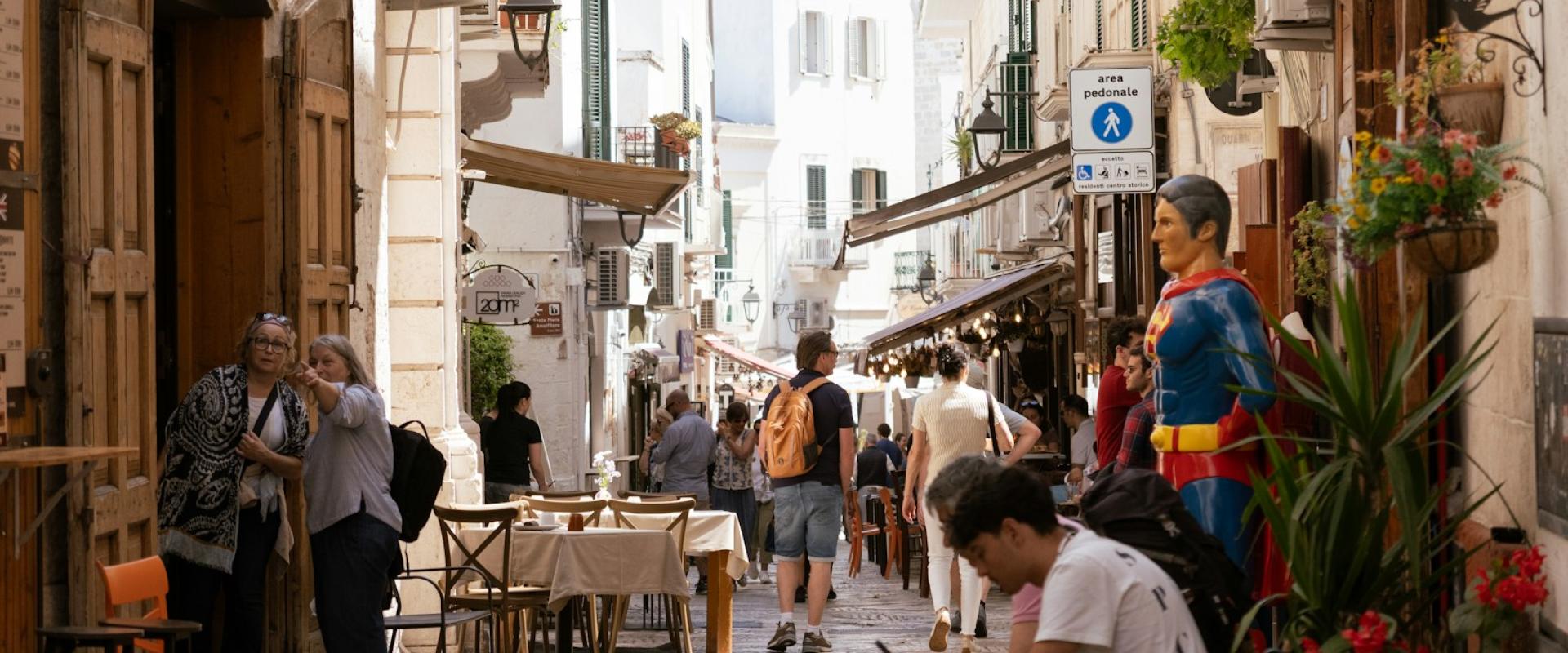
Bari Vecchia, the old town of Bari, is a dense and irregular network of narrow streets on a peninsula between the old harbour and the sea, in Puglia, in the south of Italy. It is a place where history and daily life coexist. The area has been inhabited for several thousand years, and the quarter is known for its strong local dialect, baresità, and its authentic, non-commercialised environment, though it has changed greatly in recent decades. Once seen as a gritty, closed-off district that outsiders avoided, it has been transformed by extensive regeneration since the late twentieth century into a major tourist destination, often cited as Puglia’s most visited site.
Today, it is a welcoming hub with a renowned food scene, cultural pilgrimage sites dedicated to Saint Nicholas, and revitalised public spaces such as Piazza Mercantile, the old merchants' square, and Piazza del Ferrarese, at the edge of the quarter. Visitors experience authentic local life, such as watching nonnas, the grandmothers of the quarter, making fresh orecchiette on their doorsteps, in a lane known as the street of the orecchiette, where the pasta dries on trays in the sun. In the evening, the alleys fill with locals and visitors, and the white walls glow under street lamps.
The key landmarks are three. The Basilica di San Nicola, built from 1087 to house the relics of Saint Nicholas, which sailors from Bari carried off from Myra in what is now Turkey, is one of the great early Romanesque churches of the south, and it is a place of pilgrimage for both Catholic and Orthodox Christians. Its square stone facade with blind arcades and carved lions has been a model for Apulian churches. The Cathedral of San Sabino, a Romanesque building of the twelfth and thirteenth centuries with a fine rose window and a quiet interior, stands a short distance away and contains a crypt and the relics of the city's earlier patron. The Norman-Swabian Castle, within the old town's edge on the sea side, is a fortress of the twelfth and thirteenth centuries. The Lungomare, the long seafront promenade called Nazario Sauro, runs along the water beside the old town.
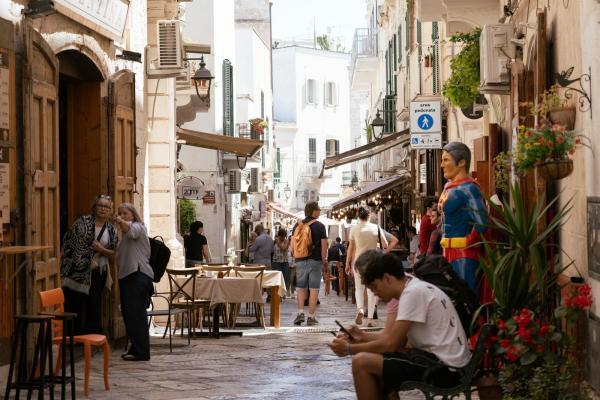
The streets themselves are the main attraction. Washing hangs across the lanes, small shrines are set into the walls, and the courtyards open into small squares. Many of the old houses are used as restaurants, shops and homes, and the food, from fried panzerotti to sea urchins eaten raw, is a pleasure.
Allow at least half a day to wander, and do not worry about a map, because the maze leads back to the seafront. Wear comfortable shoes, since the stone is polished and uneven, and keep an eye on belongings in the crowds in summer. The best time is in the morning, when the pasta makers are at work and the light is soft. Today, the old town is lively late into the evening.
Categories
More photos coming soon
Nearby Attractions
Other places to visit in Bari
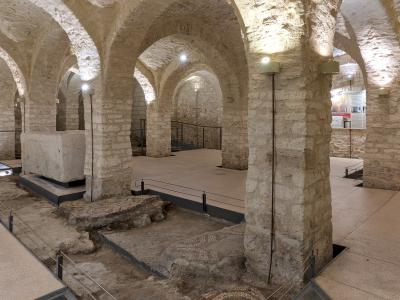
Basilica Cattedrale di San Sabino
Romanesque cathedral with Paleo-Christian mosaics
Archaeological Museums · Architectural Monuments
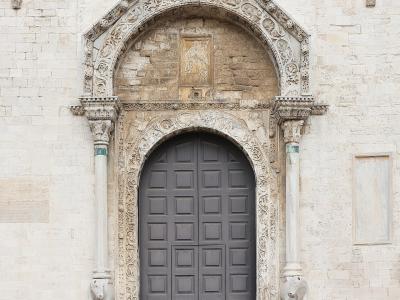
Basilica di San Nicola
Romanesque basilica housing Saint Nicholas's relics
Architectural Monuments · Historic Churches
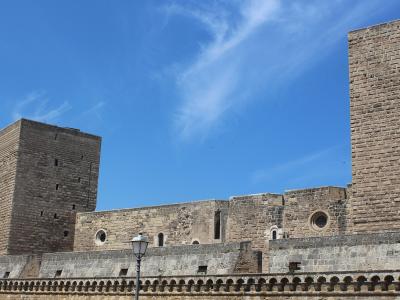
Castello Normanno-Svevo
12th-century Swabian coastal fortress in Bari
Architectural Monuments · Castles & Fortresses
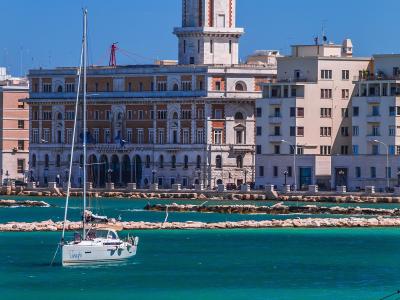
Lungomare Nazario Sauro
1920s seaside promenade with palm-lined views
City Promenades · Coastal Walks
Questions people ask
Quick Facts
Best Time to Visit
Visit between April and June or September and October for mild temperatures and fewer crowds.