







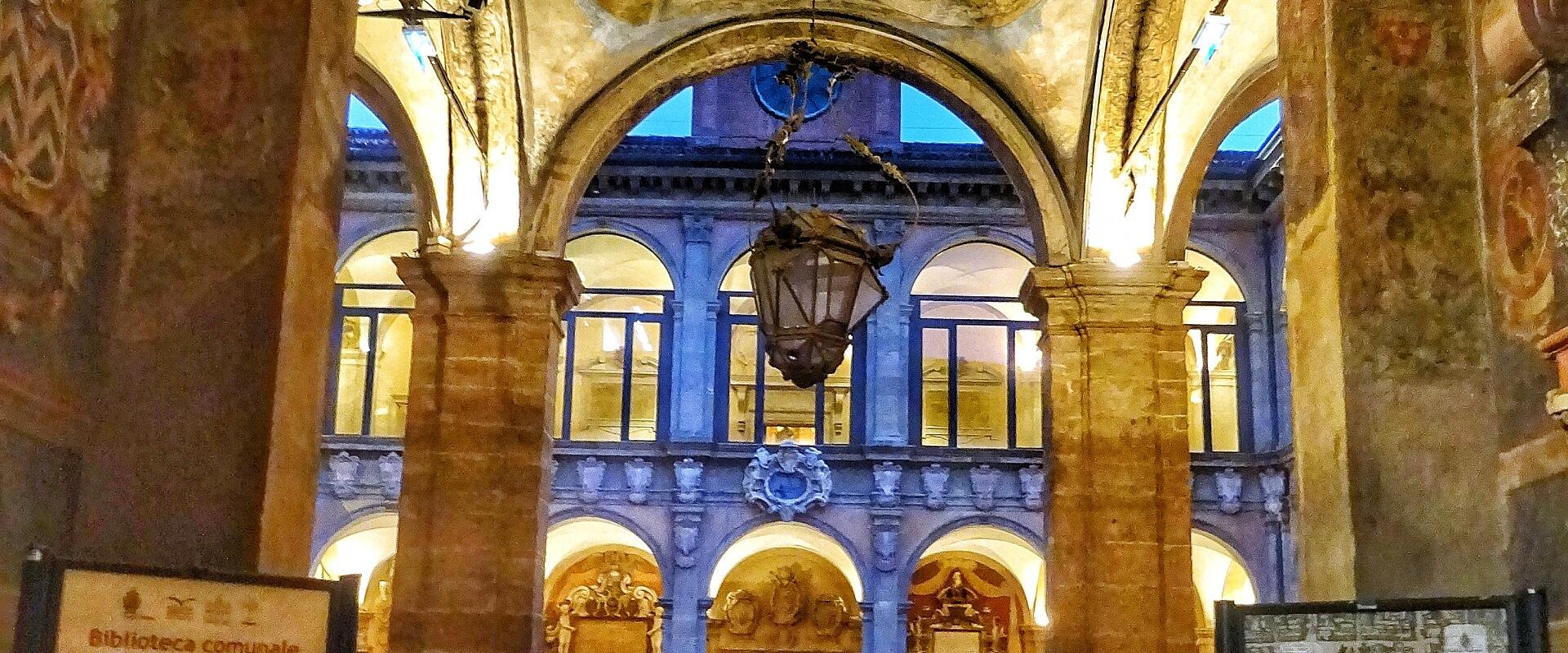
Archiginnasio of Bologna
Historic university housing the grand anatomical theatre
- Where
- Bologna, Emilia-Romagna
- Directions
- Directions
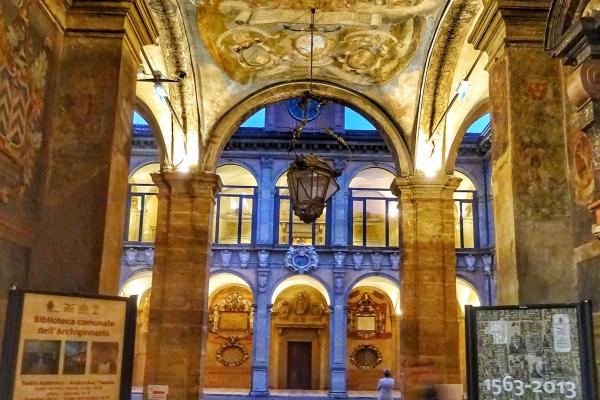
The Archiginnasio of Bologna was built between 1562 and 1563 to bring together the scattered schools of the University of Bologna, the oldest university in Europe, under one roof. It stands behind the Basilica di San Petronio, on the side of Piazza Maggiore, and it served as the main seat of the university until 1803, when the university moved to other palaces in the city. The palace was designed by Antonio Terribilia on the orders of the papal authorities, who governed Bologna at the time, and it forms a long two-storey building around a courtyard, with a graceful portico on the ground floor and an upper gallery. It was a major project, intended to give the famous university a seat worthy of its fame.
The building has a very distinctive character, because its walls, both in the courtyard and in the stairways and halls, are covered with thousands of coats of arms of students and professors, painted or carved in stone over the centuries. They record students from all over Europe who came to study law, medicine, philosophy and arts in Bologna, and the effect is of a vast, colourful patchwork of heraldry. Bologna is nicknamed La Dotta, the Learned, because of this tradition, and the Archiginnasio gives a vivid sense of it.
Today it houses the Biblioteca Comunale dell’Archiginnasio, one of the most important public libraries in Italy, with a huge collection of rare books, manuscripts and prints. Visitors can see some of the halls, including the Stabat Mater Hall, the former library of the law students, which is named after the first Italian performance of Rossini’s Stabat Mater here in 1842. The great attraction is the Anatomical Theatre, a masterpiece of Baroque design built in 1637 in carved spruce wood, where dissections were once performed in front of students. Around the walls stand statues of famous physicians, and the canopy over the professor’s chair is held up by two figures without skin, sculpted in the 18th century to show muscle structure. The theatre was destroyed by bombing in 1944 and carefully rebuilt using the original wood, so what you see is a faithful reconstruction.
The Archiginnasio is free to enter in many areas, though access to the Anatomical Theatre may require a ticket, and opening times vary. A visit takes about an hour. The building is a short walk from Piazza Maggiore, the Two Towers and the Teatro Comunale di Bologna, and it is easily combined with the Museum of the History of Bologna and the Quadrilatero market streets. It suits those interested in the history of medicine, books and universities, and anyone curious about the intellectual life of medieval and Renaissance Europe.
More photos coming soon
Nearby Attractions
Other places to visit in Bologna
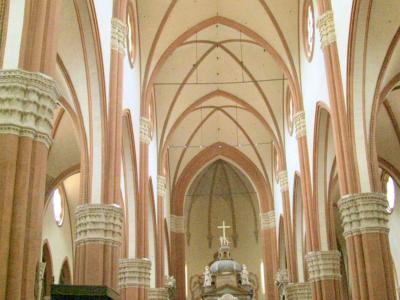
Basilica di San Petronio
Gothic basilica in Bologna's Piazza Maggiore
Architectural Monuments · Historic Churches
Bologna Art Museum (MAMbo)
World's largest Morandi collection
Art Museums
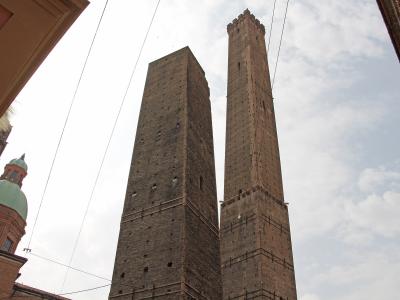
Due Torri (Asinelli and Garisenda)
Bologna's two medieval towers, closed to climbers since 2023
Free Architectural Monuments · Historic Gates
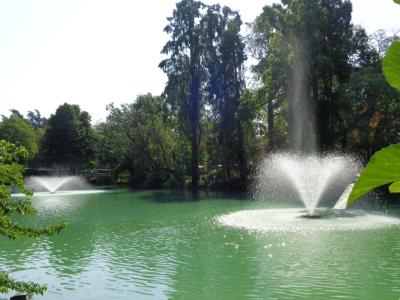
Giardini Margherita
Largest Bologna park, 26 hectares, English-style gardens
Free Botanical Gardens · City Promenades
Questions people ask
Quick Facts
Best Time to Visit
Visit between April and June or September and October for mild temperatures and fewer crowds.