







- Where
- Bergamo, Lombardy
- Directions
- Directions
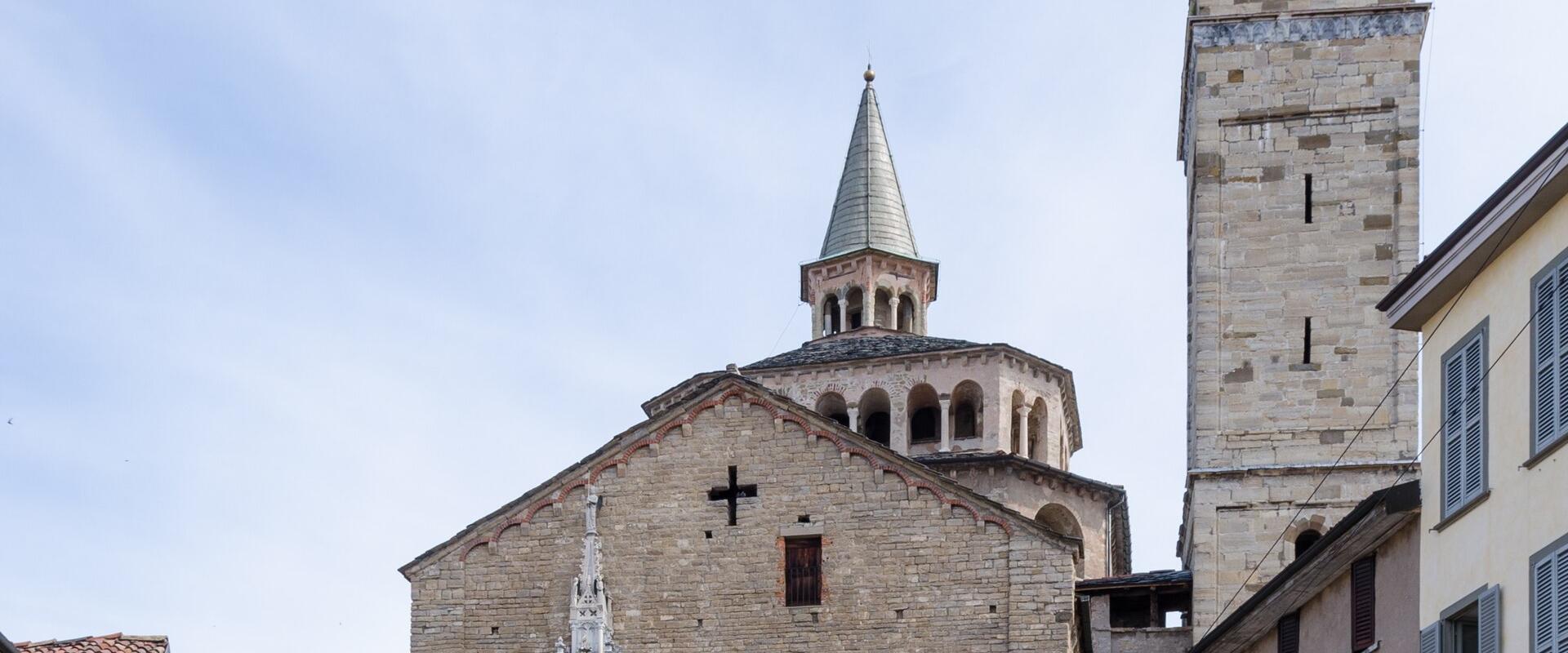
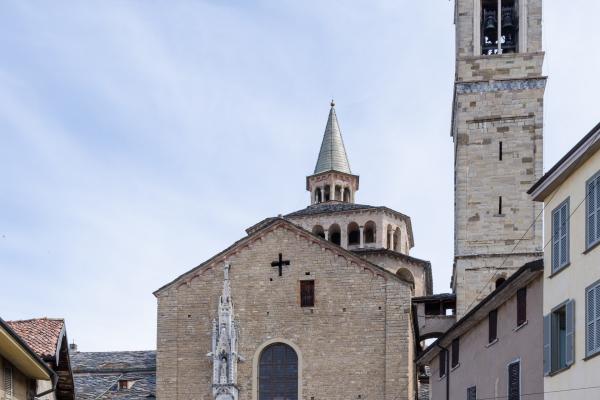
The Basilica of Santa Maria Maggiore stands in Bergamo Alta, the old upper town of Bergamo, on Piazza Duomo, directly beside the Cappella Colleoni and just behind the cathedral. It was founded in the 12th century, and tradition links its origins to a vow made during a plague in 1133, with building beginning a few years later. It was built in the Romanesque style, with a plan of a Latin cross and a tall apse, and its simple, strong forms in pale stone are best seen from the apse side, where bands of decoration and small loggias give the exterior its character. Over the centuries, the interior was altered, and in the 16th and 17th centuries it received a rich Baroque makeover, so that the building is today a Romanesque-Baroque mix of Romanesque structure and Baroque decoration.
The most famous feature of the exterior is the pair of porches on the north and south sides, with columns that rest on lions. The north porch, decorated by the master Giovanni da Campione in the 14th century, has columns that rest on red lions of Verona marble, and the south porch has white lions. These carved animals give the basilica a distinctive look and a nickname, and they are a landmark of the city. The sculptures and reliefs around the doors show the skill of the Lombard stonecutters of the period.
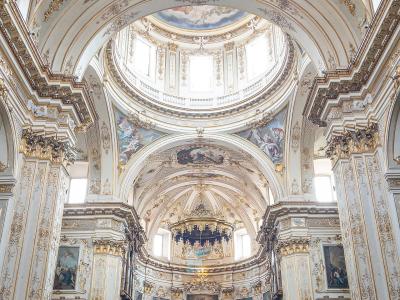
Inside, the visitor is struck by the contrast with the plain exterior. The walls and vaults are covered with frescoes, stuccoes and gilded decoration, and enormous tapestries, Flemish and Florentine, of the 16th century hang between the arches. Of special note is the choir, which has a series of wooden panels in inlay, called intarsia, designed by the painter Lorenzo Lotto in the 1520s and executed by the craftsman Giovan Francesco Capoferri. They depict biblical scenes with extraordinary detail and are one of the most remarkable works of Renaissance woodwork in Italy. A large confessional and altarpieces in Baroque style complete the effect.
The basilica also holds the tomb of the composer Gaetano Donizetti, who was born in Bergamo in 1797 and wrote operas such as L’elisir d’amore and Lucia di Lammermoor, among many others. A monument to him stands in the church, and his tomb adds a musical dimension to the visit, linking the basilica to the cultural life of the city. A museum dedicated to the composer, the Museo Donizettiano, is close by.
The basilica is an active church, so visitors should dress modestly and respect services. Opening times and ticket arrangements change, so check locally. A visit takes about half an hour. It stands in the cluster of monuments around Piazza Duomo, with Bergamo Cathedral (Duomo di Bergamo), the Cappella Colleoni and the Baptistery, and a short walk takes you to Piazza Vecchia, the Torre Civica and the Venetian Walls, which are part of a UNESCO listing. The Accademia Carrara and the Bergamo Alta Funicular are also easy to reach. The basilica suits anyone interested in art, in music and in medieval and Baroque architecture.
Categories
More photos coming soon
Nearby Attractions
Other places to visit in Bergamo
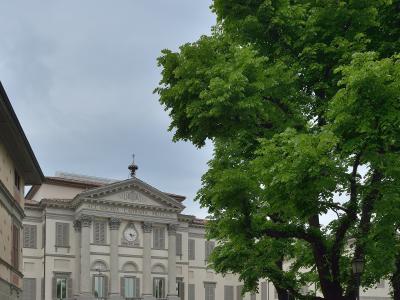
Accademia Carrara
1796 museum of Italian Gothic to 19th-century art
History & Heritage · Museums & Culture
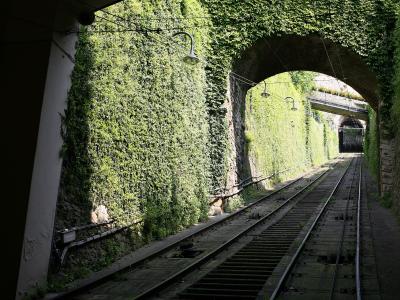
Bergamo Alta Funicular
1887 funicular connecting Lower City to Upper Town
Natural Wonders · Urban Exploration
Bergamo Cathedral (Duomo di Bergamo)
Renaissance cathedral dedicated to St. Alexander
Free Architectural Monuments · Cultural Tours
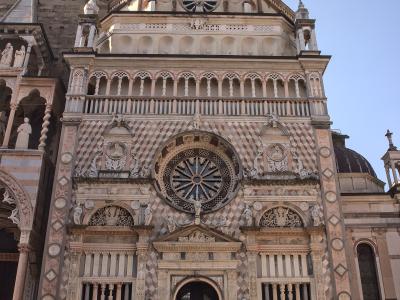
Cappella Colleoni
Renaissance mausoleum with polychrome marble facade
Free Architectural Monuments · Cultural Tours
Questions people ask
Quick Facts
Best Time to Visit
Visit between April and June or September and October for mild temperatures and fewer crowds.